
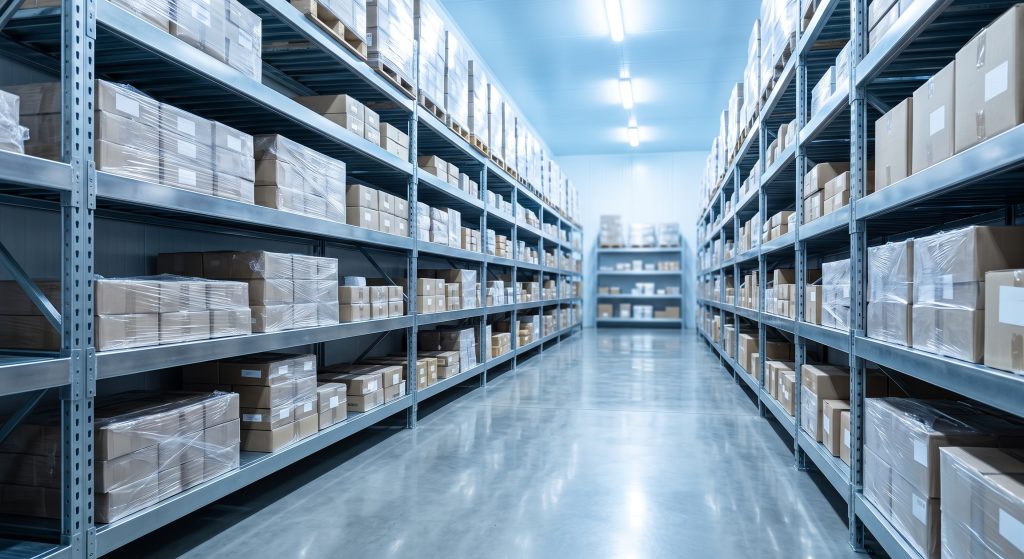
Storing food products isn’t just a matter of finding shelves that fit, the storage environment itself has to hold up to hygiene, humidity, and temperature conditions that would quietly degrade ordinary racking over time.
Why material choice comes first
Standard painted steel racking can corrode faster in food-storage environments, particularly cold rooms and anywhere humidity or regular washdown is part of daily operations. Galvanized finishes, like our Unimondial Galv range, are built specifically for this: the zinc coating resists corrosion in ways painted steel simply can’t match, which matters most in refrigerated storage and anywhere cleaning chemicals are part of the routine.
Surface design matters more than it looks
Beyond corrosion resistance, food-storage racking benefits from smooth, hole-free shelf surfaces without sharp edges, not just for worker safety, but because gaps and rough edges are exactly where residue and contaminants accumulate over time, undermining hygiene protocols no matter how often the space gets cleaned.
Density still matters, just differently
Food distribution often means high SKU counts moving on tight rotation, which points back toward standard pallet racking with full individual access (first-in-first-out) rather than drive-in systems, since food stock rotation depends on being able to reach any pallet, not just the most recently loaded one.
The practical takeaway
If you’re specifying storage for food-industry use, ask specifically about galvanized versus painted finishes and confirm the shelf surface design before comparing prices, a cheaper painted system that needs replacing in a fraction of the time isn’t actually cheaper.
See how our racking serves this sector in more depth on our Food Industry sector page, or explore Unimondial directly.