
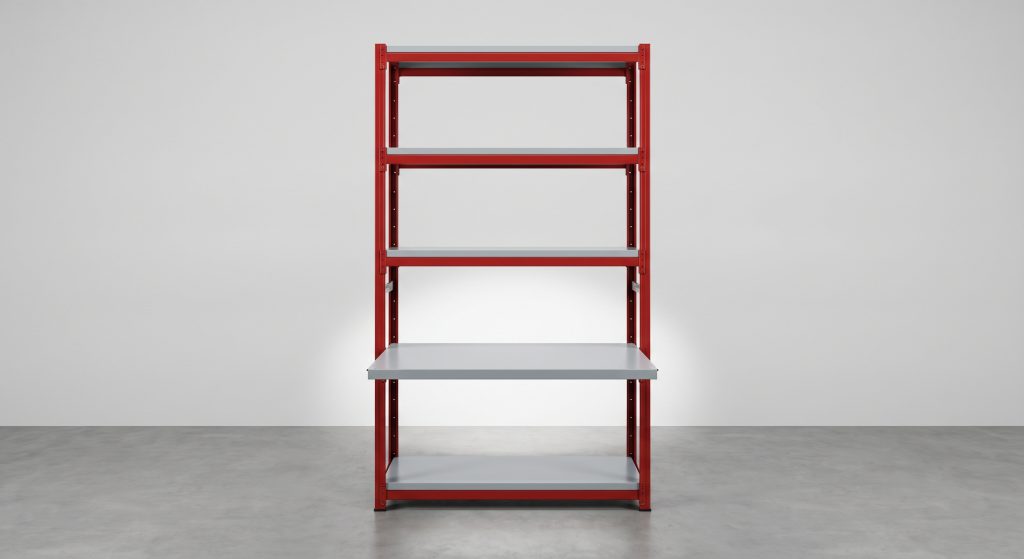
These two words get used almost interchangeably in everyday conversation, but if you’re specifying storage for a warehouse, the distinction actually matters, because it’s the difference between talking about a whole structure and talking about one component of it.
The structure vs. the surface
An estante is the complete storage unit, the full frame, uprights, and every level combined into one standing structure. A prateleira is just one of those horizontal load-bearing surfaces within it, a single shelf. Every estante is made up of multiple prateleiras, but a prateleira on its own isn’t a functioning storage system.
Why this distinction shows up in specifications
When you’re comparing racking quotes, load capacity is almost always quoted per prateleira (per shelf level), not per estante as a whole, because a taller estante with more levels naturally has a higher total capacity even if each individual shelf holds the same weight. Two suppliers quoting “200 kg” and “800 kg” for what looks like a similar unit might simply be quoting per-shelf versus total-unit capacity.
Where our own ranges fit
Our light-duty ranges, Unimondial and Unizinc, are built around configurable prateleiras, you choose the number of shelf levels, their spacing, and panel width to fit what you’re actually storing, from small parts to archive boxes. Heavier-duty ranges like Iron Fist work differently: instead of solid shelf panels, loads sit directly on horizontal beams sized for pallets.
Worth asking your supplier directly: is a quoted load capacity per shelf, or for the whole unit? It’s a two-second question that avoids a very expensive misunderstanding. Browse our full range to see how capacity is specified for each one.